
Closing On A Coastal Home In Newport County
If you are buying a coastal home in Newport County, the finish line can feel more complex than expected. Waterfront purchases often involve more than the usual loan, title, and inspection steps because flood risk, shoreline rules, septic or well issues, and local recording details can all affect closing. The good news is that with the right checklist, you can move into closing day with far more confidence. Let’s dive in.
A coastal closing in Newport County is often more layered than a standard inland purchase. Depending on the property, your transaction may involve Rhode Island Coastal Resources Management Council, or CRMC, rules, FEMA flood mapping, private well testing, septic review, and town or city land-record procedures.
One important Rhode Island detail is that deeds are recorded with the municipal clerk in the specific town or city where the property sits, not with a county recorder. In Newport County, that means your closing team needs to coordinate with the correct local office based on the property’s municipality.
Rhode Island also handles closings a bit differently than some other states. Title insurance companies and their agents commonly manage closings, but the Rhode Island Supreme Court has said the prudent practice is to retain counsel at every step, and deed drafting should be done by or carefully reviewed by a licensed attorney.
With a coastal property, timing matters. After your offer is accepted, you will usually move into the financing, inspection, insurance, and title phase, and each of those steps can become more detailed when the home is near the shoreline.
A smart early checklist includes:
This early work helps you catch issues while contingencies are still in place. It also gives you more time to respond if a document, permit, or insurance item takes longer than expected.
Most buyers focus first on financing and inspection, and that makes sense. Still, in Newport County coastal transactions, title review, survey questions, and flood-related concerns can be just as important before you remove contingencies.
Common closing checkpoints can include clear title, an acceptable property survey, and an acceptable title insurance binder. If something surfaces during review, such as a boundary issue or an open permit question, it is usually better to address it before your closing date is locked in.
If your loan terms change in a significant way, your lender may issue a new Closing Disclosure. That can trigger a fresh three-business-day review period before closing, so it is wise to leave a little room in your timeline.
Flood review should happen early, not at the last minute. Coastal homes in Newport County may come with flood insurance requirements, added premiums, elevation questions, or building limitations that affect both your monthly costs and your long-term plans.
Your flood review should include the FEMA map panel, the property’s base flood elevation, and, when needed, an elevation certificate. According to CRMC, the elevation certificate helps verify the elevation of the lowest floor and can affect the flood insurance premium.
If the property is in a Special Flood Hazard Area and your loan is government-backed, flood insurance is required. Some lenders may also require flood insurance outside high-risk zones, so it is important to confirm your lender’s rules early in the process.
Flood insurance timing matters too. New National Flood Insurance Program policies generally have a 30-day waiting period, although that waiting period is waived when coverage is tied to making, increasing, extending, or renewing a mortgage.
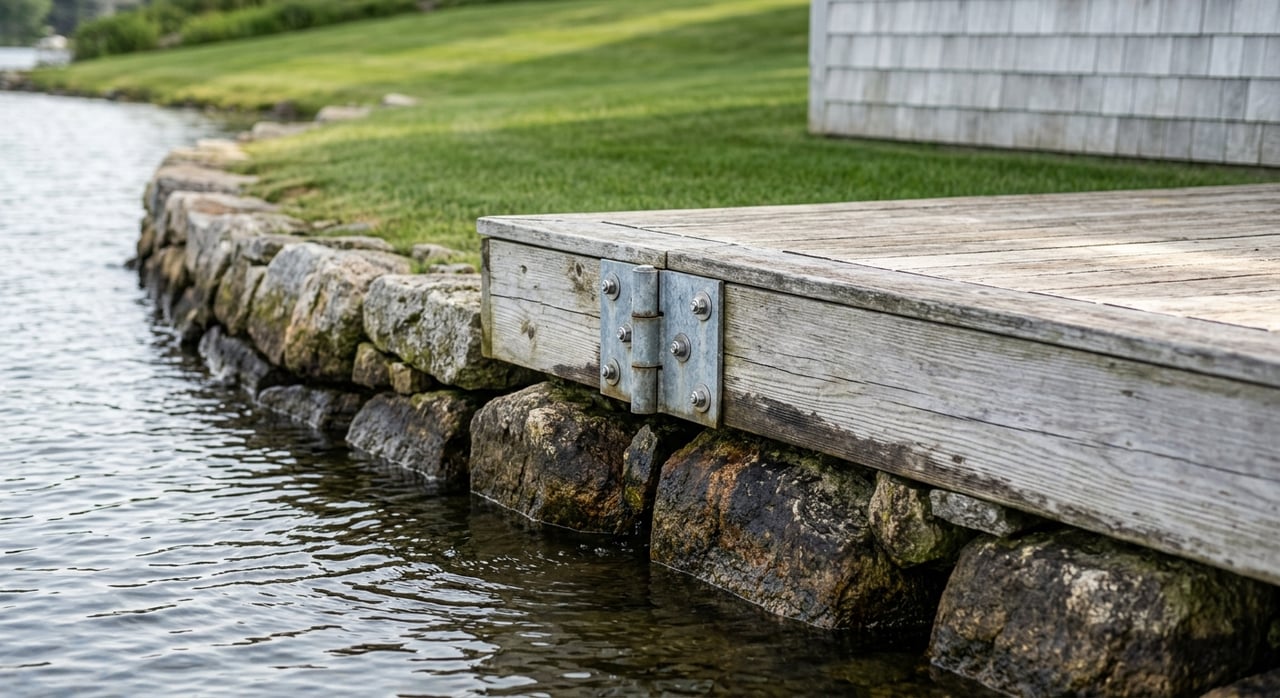
For many waterfront homes, CRMC due diligence is one of the most important parts of closing. In Rhode Island, a permit is generally required for construction or alteration on a shoreline feature or within 200 feet of one, and CRMC also regulates shoreline protection structures, docks, some septic-system activity, and certain waterfront uses.
That matters even if you are not planning major work right away. You may want to repair a seawall, improve a dock, expand a deck, or make resiliency upgrades later, and those future plans can depend on the property’s location, shoreline feature, and water type classification.
Before you remove contingencies, ask for prior permit history from the municipal building official, especially if the home has additions, repairs, docks, seawalls, or other waterfront improvements. Those records can help show how the structure was built, whether updates were made, and whether resiliency measures were taken.
It is also worth confirming whether the parcel falls under a CRMC Special Area Management Plan or has restricted waterfront uses. That information can affect what may be built, repaired, or added later.
Older coastal homes can be full of character, but they deserve extra scrutiny before closing. Many were built before current flood-related construction standards, which can affect insurance costs, future renovations, and repair requirements.
CRMC notes that new and substantially improved structures in flood-prone areas must be elevated at least one foot above base flood elevation and use flood-resistant materials below that level. If you are buying an older home, you will want to understand how the existing structure compares with current standards before you make final decisions.
This is also where shoreline change becomes part of your due diligence. CRMC says erosion and sea-level rise can affect roads, utilities, and the long-term design life of a coastal structure, and it recommends exceeding minimum setbacks because shoreline change continues over time.
Not every Newport County home is connected to municipal sewer or water, so utility questions can play a major role in closing. If the home has a private well, Rhode Island law requires water testing before a sale or transfer.
If the property has a cesspool, you need to understand the timing and upgrade obligations. Rhode Island DEM says any cesspool serving a property sold with a closing date on or after January 1, 2016 must be removed from service within one year of closing, and the upgrade is negotiated between buyer and seller.
For coastal properties, location near the shoreline can trigger additional septic rules. CRMC states that septic systems within fifty feet of the shoreline must be zero-discharge systems, and cesspools within 200 feet of the shoreline must be replaced with a new septic system or the property must connect to sewer where available.
If storm damage has affected a septic system, the process can involve more than one agency. In that situation, DEM permitting comes first, followed by CRMC review.
Closing costs on a higher-priced coastal home can shift more than buyers and sellers expect, so tax conversations should happen early. Rhode Island’s real estate conveyance tax is $2.30 per $500 of consideration, with an additional $2.30 per $500 on residential property consideration above $800,000.
The tax is paid when the deed is recorded. It is traditionally handled by closing attorneys in escrow, and unless the contract says otherwise, the seller is the responsible party.
Because many Newport County coastal homes fall into higher price ranges, this added tax can materially affect final numbers. It is much better to discuss it during negotiations than to be surprised as closing approaches.
Before signing, plan for a final walk-through. This is your chance to confirm agreed repairs are complete and to make sure any items the seller agreed to leave are still in place.
At the table, you will sign the note, mortgage, deed, and related settlement documents. Take the time to review each document carefully and ask questions if something looks different from what you expected.
If repair issues are still unresolved, one possible solution is a seller credit instead of completing the repair before closing. That option depends on the contract terms and lender guidelines, but it can help keep a transaction moving when both parties agree.
Once the documents are signed and funds are handled, there is still one more important step. The deed must be recorded with the municipal clerk for the town or city where the property is located.
Because Rhode Island uses a municipal land-record system, not a county-based one, it is a good idea to verify that recording happened promptly. That final step is what places the transfer into the local land evidence records.
For coastal buyers, closing is not just about getting the keys. It is about confirming that flood, shoreline, title, utility, and recording details were handled correctly so you can move forward with clarity.
A well-managed Newport County coastal closing is really a process of reducing risk. When you confirm flood exposure, review CRMC rules, verify permit history, check septic or well status, and stay organized through title and closing, you put yourself in a much stronger position to protect both your investment and your enjoyment of the property.
If you are preparing to buy or sell a coastal home in Newport County, working with an experienced waterfront real estate professional can make the process feel much more manageable. For tailored guidance and steady communication from contract to closing, connect with Cheryl Finley.






Looking to buy, sell, or just have a question? I'm always available to help and would love to work with you. Contact me today to start your home searching journey!